The Best Sound Around
Learn the sound of Musical Instruments. Children can make the association between what an instrument looks like and the sound it makes.


Sound System

Learn the sound of Musical Instruments. Children can make the association between what an instrument looks like and the sound it makes.
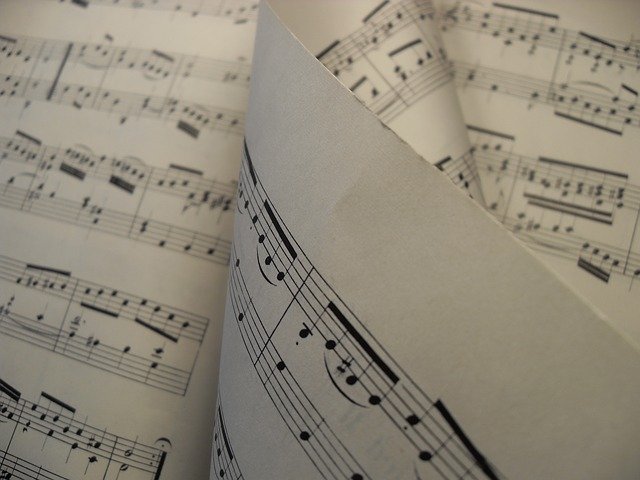
Music Track, Music Genre – Listen to each sound to find out what they belong to.
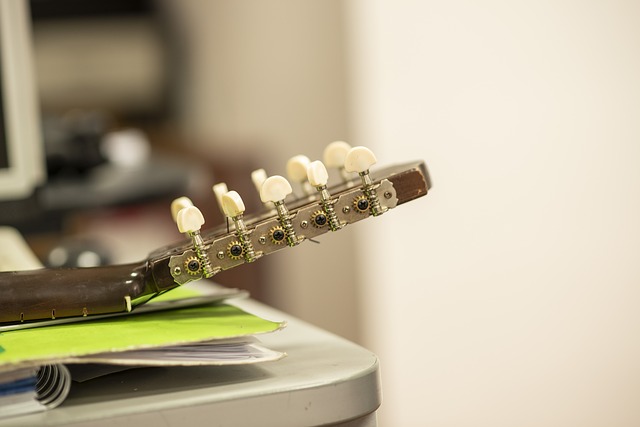
Your Favorite Music can say something about your Personality. Your favorite music can make you feel happy and inspired which may describe your Character.
Understanding basic time signatures and their relationship to bar, bar lines and counting in music. https://jolawry.com
Understanding basic time signatures and their relationship to bar, bar lines and counting in music. https://jolawry.com
Continue readingLearn how to read the basics of music! https://jolawry.com
Continue readingMaking Music and posting new videos can help build your audience. Here are a handful ideas about Music Video. https://jolawry.com

There are probably not many things that exist, have a huge impact on our lives, and can fill us with happiness and satisfaction in an easy way. At the right dose and amount, different music genres are not only good for the soul, it also helps prevent depression, but also help to be healthy and happy. Of course, other factors also influence, but music plays a big role. Music is a useful developmental tool for the development of children and is very popular with many parents in their upbringing.
Why do we build emotional bonds to some songs and react with goosebumps, bursts of energy, or sweating? When making music or listening to our favorite music, the neurotransmitter dopamine is released in extremely high amounts. This makes us feel satisfied. Sometimes just the thought and anticipation of our long-awaited concert is enough to fuel our mesolimbic system, the reward center, with dopamine.
A study compared the emotions of the participants before and after listening to happy or sad music. After listening to happy music, people were perceived as happier based on the faces of others. When the music was sad, they appeared sad. So: He who listens to happy music is happier.
The choice of music can be based on the mood or the mood of the music. Whichever of the two methods is preferred, mood management is one of the biggest reasons we love music. As described in the point “Music transmits emotions”, happy music has a refreshing and uplifting effect on us and sad music has a negative influence on our mood.
Doctors, therapists, and educators have also been using the power of sounds for several years. Music can enable us to communicate, overcome psychological barriers, relieve pain and evoke memories.
Music has been used in the treatment of coronary artery disease for many years to reduce anxiety and improve physiological responses such as heart rate and respiratory rate in patients. 23 studies involving over 1500 patients showed that listening to music reduced blood pressure, heart rate, and feelings of anxiety. It is particularly effective if the patients are allowed to choose the songs themselves. Just an hour of music from your favorite band helps heart attack patients recover, according to Finnish research from the University of Helsinki.
In 60 percent of people who have had a stroke, the visual areas of the brain become damaged. There is visual neglect of the affected side i.e. a “visual neglect”. Studies have shown that when people listen to their favorite music, they regain their visual attention, like driving your car on the road.
We’re currently in the throes of the Spotify saga, in which musicians are boycotting the audio platform in protest of Spotify’s deal with podcaster Joe Rogan.

While some Spotify lovers may disagree, there are plenty of other options for fantastic music listening. Here’s a quick review of some of the more well-known options.
If you’re just curious about what other music services are out there rather than Spotify, check this list below:
Aside from Spotify, Amazon Music is one of the best popular music services, alongside YouTube Music and Apple Music. It has three separate music tiers; as you progress up the ladder – Amazon Music Free, Amazon Music Prime, and Amazon Unlimited, you will have access to several songs of higher quality. Listening to podcasts is also an option.
Apple Music is a better alternative with its 90 million songs. It boasts better audio quality, including “immersive music with dynamic head monitoring” for AirPod users.
The free version is not available; you must use separate software to listen to podcasts.
Bandcamp describes itself as an “online record shop and music environment” where fans pay straightforwardly to independent musicians and podcasters. There is a free service; you just only need to simply listen to featured tracks by artists and buy their digital or physical albums.
When it comes to radio stations, there are pretty much number of it all over the globe. They usually play music that showcases their very own culture, previous and current musicality. However, there are way too much formats and aggregators in connection to this matter. So, to downgrade the list, below are some of the best soundscapes to listen into.

Tune up your radio and explore the beautiful sound of music with these great and relaxing radio stations:
If you like to listen to tender music with songs that can make your body move to the groove, then you would never go wrong in listening to Bollywood. What Retro Bollywood would render to your ears are the golden age music that were presented during the mid-1950 and 1980. They also play soulful melodies and a combination of western plus Indian classical musics.
Compared to other radio stations over the net, the playlist here includes links with handy click buttons. That way, you can go back and listen to music that you have missed.
Over millions of radio stations within this Latin land, the Mexican and border music generally combines native music plus foreign genre of rock and pop. As you go along, there is also a trusted source of pop music of the Latin nationals with Tejano fusion tunes.

Sure, you get it not only with a nostalgic feel but also when you listen to a particular song. Music can also be used to influence our emotions. Therefore, it is not surprising that different music genres have been used for many years as a cure for people with mental health and behavioral problems.
Since ancient times, people have used music to make them feel better. But according to Susan van Hooren, music therapy is much more than a good feeling. ‘In music therapy, we apply musical parameters to influence emotions.
After the Second World War, the use of music therapy in healthcare started to gain momentum. At that time, more attention was paid to the wellbeing of the patient, especially psychiatric patients. This provided room for more creativity and therapeutic interventions to complement medical treatments.
“Music therapy as an empirical therapeutic intervention is used today for different support needs and different target groups,” says Susan van Hooren. This includes psychiatric care for people with depression, psychotic disorders, or addiction problems, but music therapy includes care for people with mental illness, acquired brain damage, Parkinson’s disease.
It is also found in rehabilitation such as CVA, care for the elderly such as dementia, and children with ADHD and autism.
According to many studies, music therapy is also effective for people with dementia. How does this process work? Van Hooren: ‘There are several hypotheses about this. First, music can provide a sense of familiarity, because it evokes associations with the familiar environment or fond memories.
These memories appear to be strongly entrenched, even in people with dementia. This familiarity can make someone feel safer, reduce inner unrest and thus reduce behavioral problems at the same time.
Music can also reduce tension and stress. Van Hooren: “This applies to both the subjective experience of stress and the physical response to stress such as blood pressure, heart rate, and skin conductance because music activates very old structures in the brain.
In these cases, it is important that the needs of the parties are closely coordinated and the non-verbal response is activated almost continuously. Requires a patient-centric attitude and very good observation skills.
But what is the best music for the brain, the best music to touch its sensitive nerves? “It’s a difficult question that can’t be answered in one sentence,” says Van Hooren. It can be happy or sad music for example. We know the sad music paradox.
It evokes empathy and even positive feelings, which can make sad music soothing. In any case, many scientists agree that it is important to match the music used to the personal tastes of the people involved as closely as possible. With the help of the internet, different websites like top link building services, podcasts, radio, mobiles, and other helpful links.

The evolution of music festivals is something to marvel at. From the wigs and tie dye shirts in 60’s counterculture, today’s festival goers have much more options when it comes their style! You’ll find there isn’t one for every taste – even if you crowdsourced your annual mud Fest last year because rock wasn’t really what got ya movin’.
If you want to experience the best all-out festival in the music industry, come and check these out:
The Field Day event has been a go-to for anyone looking to get their liquor addiction feed on. With over 150 beers and wines available, it’s not difficult at all! If you’re attending this year make sure that after drinking the appropriate amounts of brews throughout both days there’s still room left in your stomach because Village Green offers some amazing vegan food options such as pizza or nachos with beans instead (and they taste like heaven).
Glasto is a festival with a whole world of activity outside the arena, which includes music from pop to reggae and rock. The line-up consists exclusively different genres that will keep you on your toes!
Green Man has been around for fifteen years now and it’s as cute as ever.
For singers, vocal recording is often a very personal, emotional act in which many factors play a role. At the same time, the quality of production often stands or falls with the vocal performance.
https://www.youtube.com/watch?v=kRKcHyVMfQA
How does it feel to stand behind the microphone and have to “deliver”? What ways and means do singers have to get the best possible result? Which factors are particularly important to you? Is there one, right workflow? To find out, I asked some authors from the Bonedo Vocals editorial team and other experienced singers of various genres how and under which technical and emotional circumstances they prefer to record singing.
In general, it can be said that the method used to record the vocals depends heavily on the respective song and genre. Usually, the character of a song already tells us whether, for example, a lot of singing technique is required or the emotions are more important than perfection. The approach to vocal recording also varies depending on the genre, as singers explain to me. Logically, a relaxed jazz track is approached differently in the studio than an energetic rock song. In addition, there is also the occasion for which the singing takes place: In a purely commissioned job, different factors apply than when singing your own songs. However, there are some aspects of vocal recording that apply equally to all genres.
When it comes to singing a song, there are different approaches to choose from: For example, entire takes can be recorded, i.e. recordings that are sung through in one piece. Within the songs, there is often an arc of tension or narrative connections and thus also a dynamic development. In order to capture this tension and tell a story, whole takes are often recommended, from which the best passages are then selected afterward in editing.
Especially in jazz, which lives from snapshots due to its improvisational character, this approach is usually the method of choice. The whole take from the very beginning is good in order to feel the overall flow. Most of the time there are already many usable parts. If the song can be divided narrative and dramaturgically well into individual sections, it sometimes makes sense to only care about one verse at first and then jump to the next part.
This is not unusual in (electro) pop. Often the preferred method in the “hard & heavy” area is recording part by part. Especially when you want vocal effects to come into their own or there are many different energy levels in a song. When shouts are recorded, for example, people often work line by line.
In times of affordable, mobile recording setups, it is now common practice that vocals are often recorded in the living room or even in a hotel when there is no money or time left for a studio visit. It doesn’t necessarily have to be a recording studio: The atmosphere has to be right.
Whether at home or in the recording studio: Working with someone else, the producer or the sound engineer, is particularly important to all of the singers surveyed. These people give singers the feeling of being in good hands and thus contribute significantly to a successful vocal session.
You will want a recording studio for its technical aspect. In the studio, you have access to different microphones and preamplifiers that are usually not around at home. This ultimately results in recordings that sound more technically professional than would be the case with improvisational means at home.
Learn how to read the basics of music!
https://www.youtube.com/watch?v=miKHvV_jvTg
In this video, you may learn the different Genres of Music.
Understanding basic time signatures and their relationship to bar, bar lines and counting in music.
Making Music and posting new videos can help build your audience. Here are a handful ideas about Music Video.