
Why European Crime Thrillers Often Use Minimalist Music Instead of Traditional Action Scores
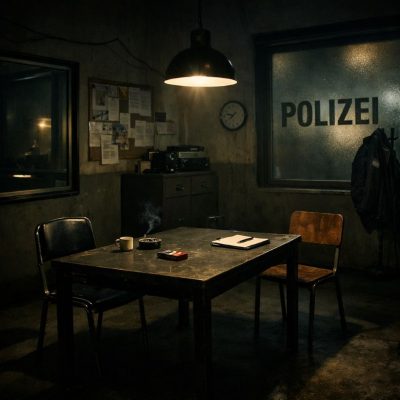 Music shapes roughly 30 percent of a viewer’s emotional response to a film, according to research from the University of California, Davis. That statistic carries real weight when you consider how differently European and Hollywood crime thrillers approach their soundtracks. While American productions have long leaned on sweeping orchestral scores to tell audiences how to feel, European filmmakers have taken a quieter, more deliberate path, one where silence itself becomes a storytelling tool.
This contrast has become especially visible in recent years as streaming platforms bring European crime content to global audiences. Reviews and analysis surrounding productions like the iHostage Nederland film have drawn attention to this sonic divide, prompting wider conversations about how regional filmmaking cultures influence every element of production, including music. The Dutch thriller genre, in particular, has consistently favored stripped-back audio landscapes that feel more documentary than cinematic, and audiences are paying attention.
The Hollywood Blueprint: Music as Emotional Instruction
Hollywood crime thrillers have long operated with a clear musical philosophy: guide the audience. Composers like Hans Zimmer and John Williams built careers on scores that announce tension before it arrives on screen. Think of the low, pulsing brass in a police procedural or the rising strings just before a suspect breaks under interrogation. The music functions as a second narrator, underscoring emotions that might otherwise remain ambiguous.
This approach is not accidental. The studio system was built around broad audience appeal, and music became one of the most reliable tools for managing emotional clarity across diverse demographics. The American Film Institute notes that film scoring traditions in Hollywood trace back to the silent film era, when live musicians were literally required to fill the acoustic void. That legacy of filling space has persisted even as technology made silence a genuine option.
The result is a scoring style that prioritizes accessibility. Audiences know exactly when to feel afraid, relieved, or triumphant. The music removes interpretive risk. It is effective, often thrilling, but it also removes a certain kind of trust in the viewer.
The European Approach: Restraint as a Storytelling Device
European crime cinema, especially from Scandinavia, the Netherlands, France, and Germany, operates on a different logic entirely. Minimalist scoring, or the deliberate use of ambient sound and silence, is not an aesthetic accident but a philosophical stance. The goal is immersion, not instruction.
Take the Nordic Noir tradition. Productions like Denmark’s The Killing and Sweden’s The Bridge helped define a genre built on atmospheric dread rather than musical crescendo. Composers working in this space favor drones, sparse piano lines, and field recordings over full orchestration. The British Film Institute has written extensively about how Scandinavian crime dramas use sonic restraint to reinforce themes of institutional coldness and moral ambiguity. The music reflects the world of the story rather than editorializing about it.
French crime cinema takes a related but distinct approach. Directors working within the tradition of auteur filmmaking often treat music as a disruptive element to be used sparingly. The philosophy, influenced by the French New Wave, holds that an unscored scene forces the audience to engage more actively with performance and environment. Research published in the Journal of Film and Video found that European art-house and genre films consistently score lower on non-diegetic music density compared to Hollywood counterparts, meaning European films more often use sounds that exist within the world of the film rather than sounds added purely for emotional effect.
Silence, Ambient Tone, and the Realism Effect
One of the most significant consequences of minimalist scoring is its relationship to perceived realism. When a thriller unfolds without a traditional score, viewers often report feeling as though they are watching something real, something closer to a news report than a movie. This is not a coincidence.
Ambient sound design fills the gaps that orchestral music would typically occupy. The hum of fluorescent lights in a police station. The distant traffic outside a suspect’s apartment. Rain on glass. These sounds root the story in a recognizable physical world. Dolby Laboratories, in their research on immersive audio experiences, has noted that natural soundscapes increase audience presence, the psychological sense of being in the scene rather than watching it from outside.
For crime thrillers specifically, this realism effect carries narrative consequences. When there is no swelling score to signal that a character is in danger, the audience cannot rely on musical cues. Tension becomes genuinely uncertain. Dutch and German crime productions have used this technique to particularly strong effect, building dread through prolonged silence followed by sudden, sharp sound, such as a door closing or a phone ringing, rather than through composed build-up.
Audience Reactions: Adjustment, Then Appreciation
Global streaming has created an interesting testing ground for these differences. Audiences raised on Hollywood scoring conventions sometimes struggle initially with European minimalism. Common reactions include descriptions of a film feeling “slow” or “cold,” descriptors that often reflect sonic expectations rather than pacing problems.
Yet research from Netflix’s internal audience analytics, cited in a 2023 Variety report, suggests that European crime series consistently rank among the highest in viewer completion rates once audiences pass the first two episodes. The adjustment period is real, but so is the deeper engagement that follows. Viewers who lean into the quieter sonic world often describe feeling more invested in character psychology than they do in action-heavy alternatives.
This tracks with broader findings from Stanford University’s neuroscience and film research group, which found that musical ambiguity, where music does not clearly signal an emotion, activates broader regions of the brain associated with interpretation and empathy. Minimalist scoring, in other words, may literally make audiences think harder and feel more personally.
READ ALSO: How TV Soundtracks Stir the Heart and Define Every Scene You Stream on 123Movies
Regional Identity Shapes Sonic Choice
Ultimately, the difference between Hollywood and European crime scoring is not simply a matter of budget or tradition. It reflects deeply held assumptions about what cinema is for. The American model prioritizes emotional guidance and broad accessibility. The European model, seen clearly in Dutch, Scandinavian, and French genre work, prioritizes immersion, ambiguity, and the intelligence of the viewer.
Neither approach is superior in absolute terms. But as global audiences grow more comfortable with subtitles, cultural specificity, and quieter storytelling, the minimalist tradition is gaining serious ground. The hostage drama and Dutch crime thriller conversation, spurred partly by recent streaming releases from the Netherlands, is a small but telling sign of that shift. Music, or the careful absence of it, turns out to say as much about a culture’s cinema as any image on screen.